Where Toilet Trouble Usually Starts
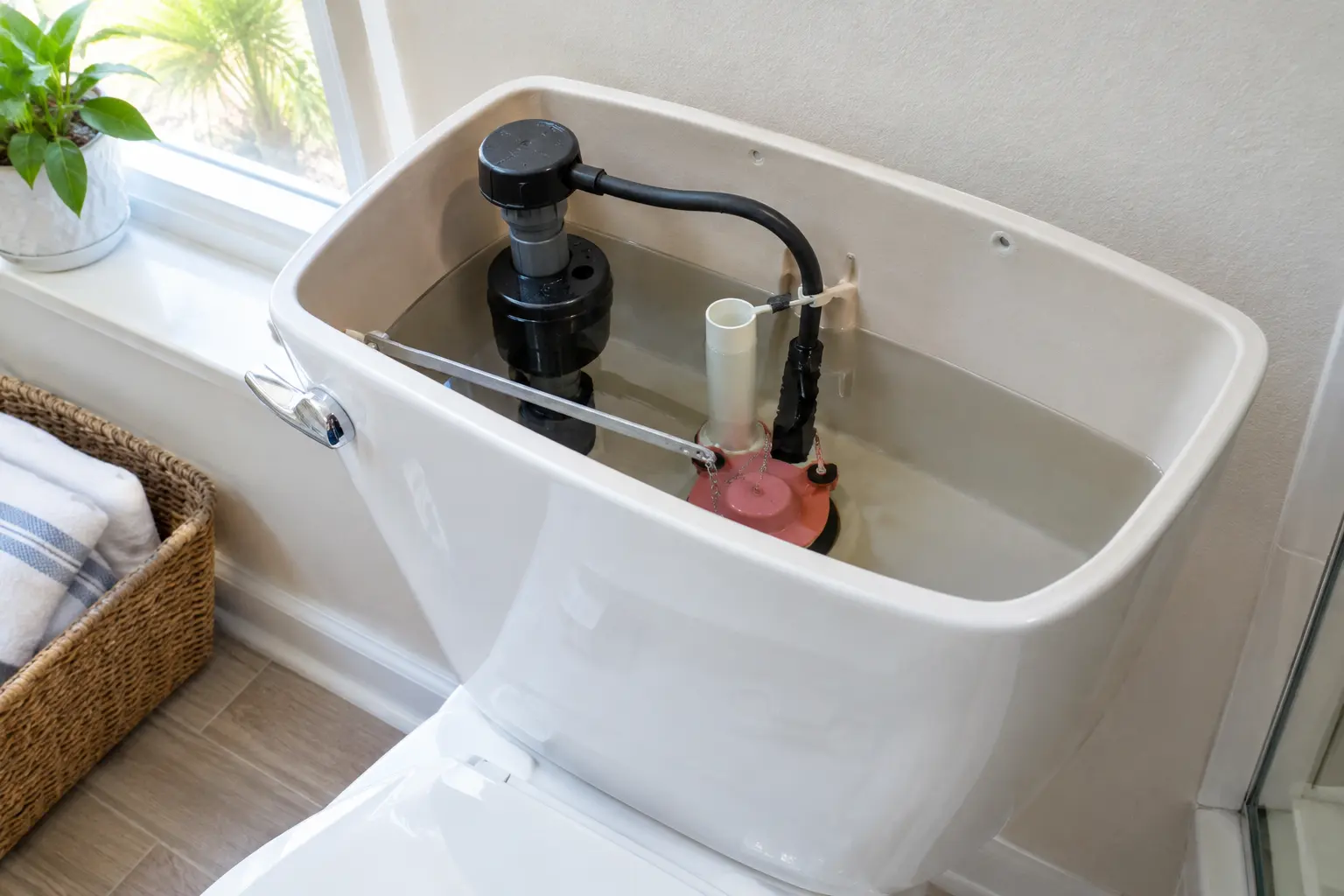
Inside the tank, a flapper, fill valve, and flush valve control every flush. Rubber flappers stiffen and warp over time, and fill valves wear out, so water keeps trickling into the bowl or the tank keeps refilling on its own.
At the floor, a wax ring seals the toilet to the drain. If the toilet rocks, that seal can break, letting water seep under the base. A weak or double flush often points to partial clogs, low tank water, or worn parts.
What Toilet Repair Covers
Repairs include replacing flappers, fill valves, flush valves, handles, and supply connectors, adjusting water levels, clearing clogs from the trap, and resetting a toilet on a new wax ring with secure floor bolts.
If the bowl or tank is cracked, or the toilet clogs constantly by design, replacement may be the better value, and that can be handled as a fixture installation.
How this kind of job usually unfolds
- 1
Describe the behavior
Tell us what the toilet does and when it started.
- 2
Inspect tank and base
Parts, water level, seal, and mounting are checked.
- 3
Replace worn parts
Faulty components are swapped or the toilet is reset on a fresh seal.
- 4
Test several flushes
The toilet is flushed and checked for leaks before the visit wraps up.
Questions about toilet repair
How can I tell if my toilet is leaking silently?
Add a few drops of food coloring to the tank and wait without flushing. Color in the bowl means water is slipping past the flapper.
Why does my toilet gurgle when another fixture drains?
That can point to a venting or main line issue. Mention it so the right line is checked.