Why Hidden Leaks Are Hard to Pin Down
Water travels. A drip from a supply line can run along a pipe or framing member and appear several feet away from where it started. In humid South Florida air, a damp patch can also be mistaken for condensation, which delays the search.
Many homes in the area sit on concrete slabs, with supply lines running beneath or inside them. A slab leak may show up only as a warm spot on the floor, the sound of running water when everything is off, or a water meter that keeps moving.
What Leak Detection Includes
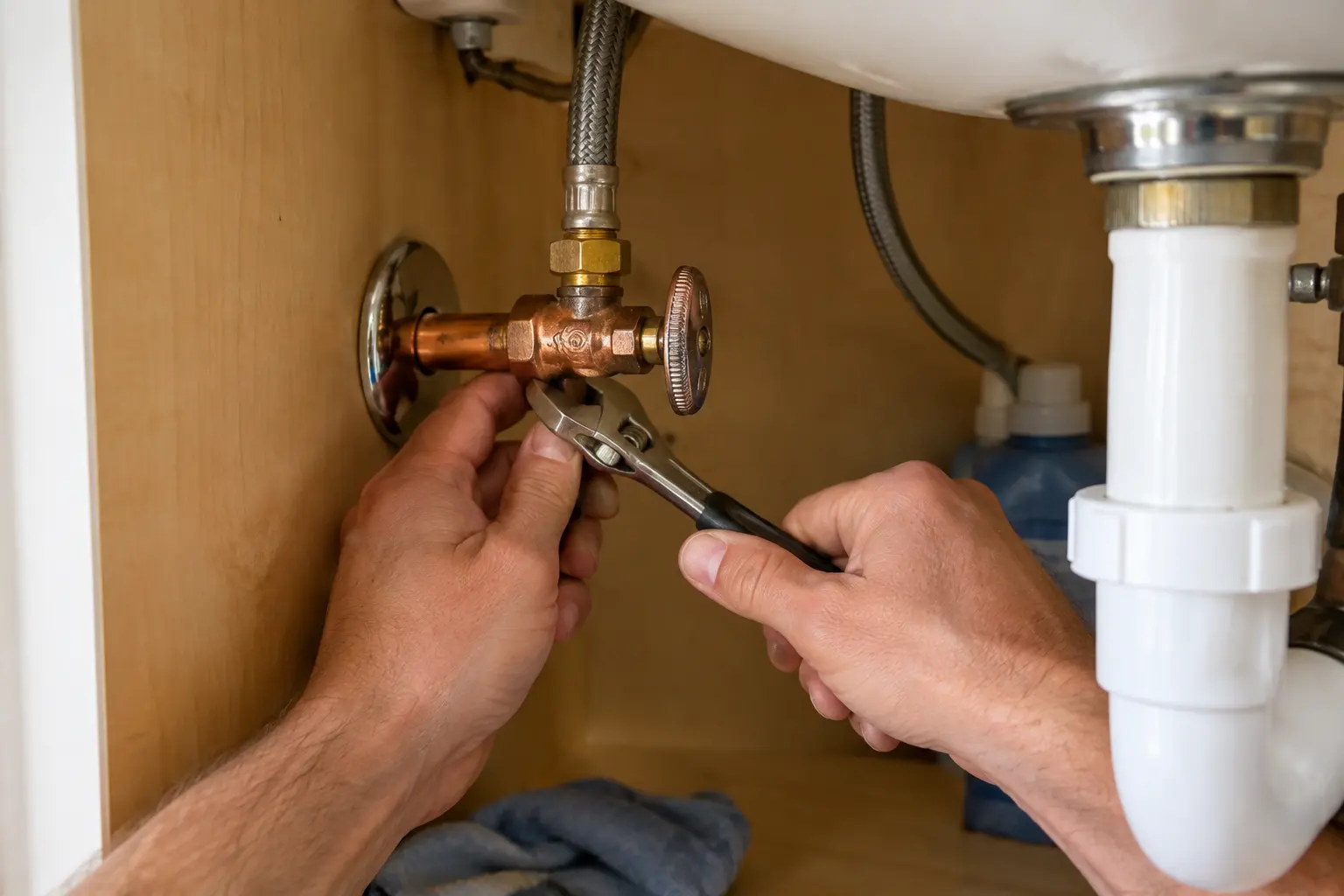
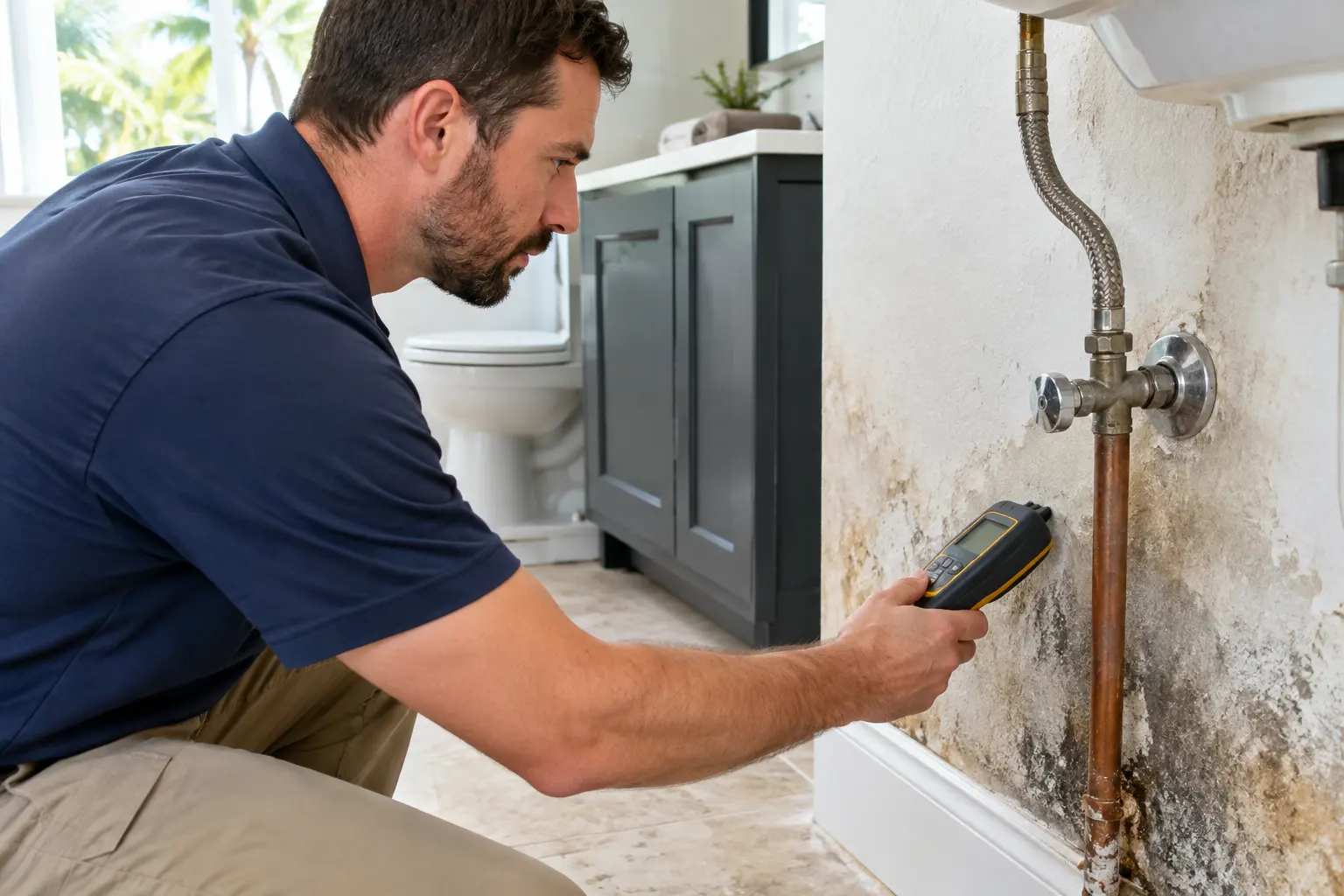
Leak detection begins with simple checks: reading the meter with all fixtures off, isolating hot and cold sides, and looking at the most common failure points. From there, moisture readings, listening for flow, and pressure testing of individual lines help narrow the location.
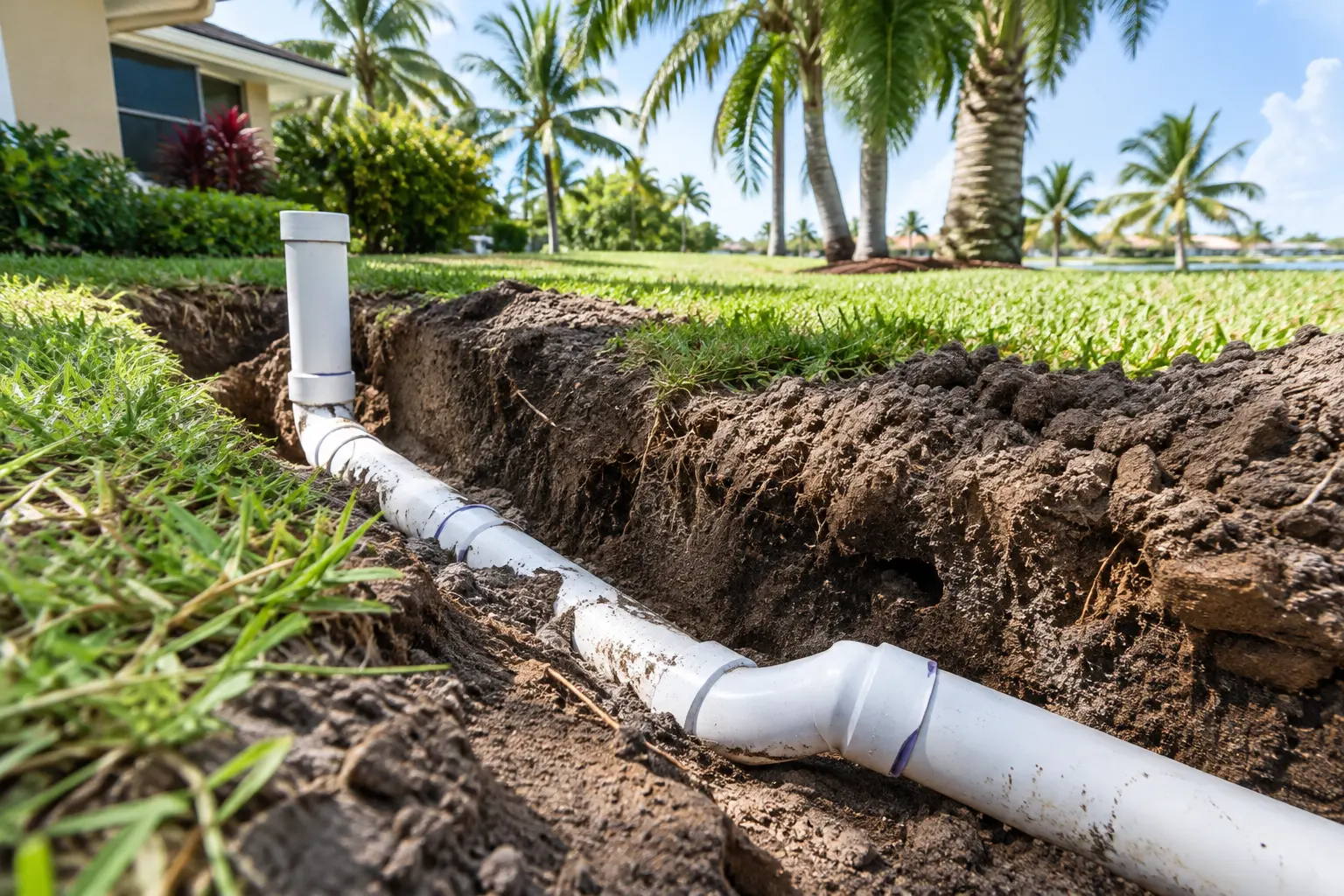
Once the source is located, the repair can range from a spot repair to rerouting a section of line, depending on what the leak is coming from.
How this kind of job usually unfolds
- 1
Share the clues
Tell us about bills, stains, sounds, and when you first noticed them.
- 2
Confirm a leak exists
Meter and pressure checks show whether water is escaping and on which side of the system.
- 3
Narrow the location
Moisture and sound checks trace the water toward its source with as little disruption as possible.
- 4
Plan the repair
With the location known, the repair approach can be chosen.
Questions about leak detection
Can a leak be found without opening walls?
Often the location can be narrowed closely before any opening is made, which keeps disruption small.
Is a moving water meter always a leak?
If nothing is running, including irrigation and ice makers, steady movement usually means water is going somewhere it should not.