Why Faucets Start to Misbehave
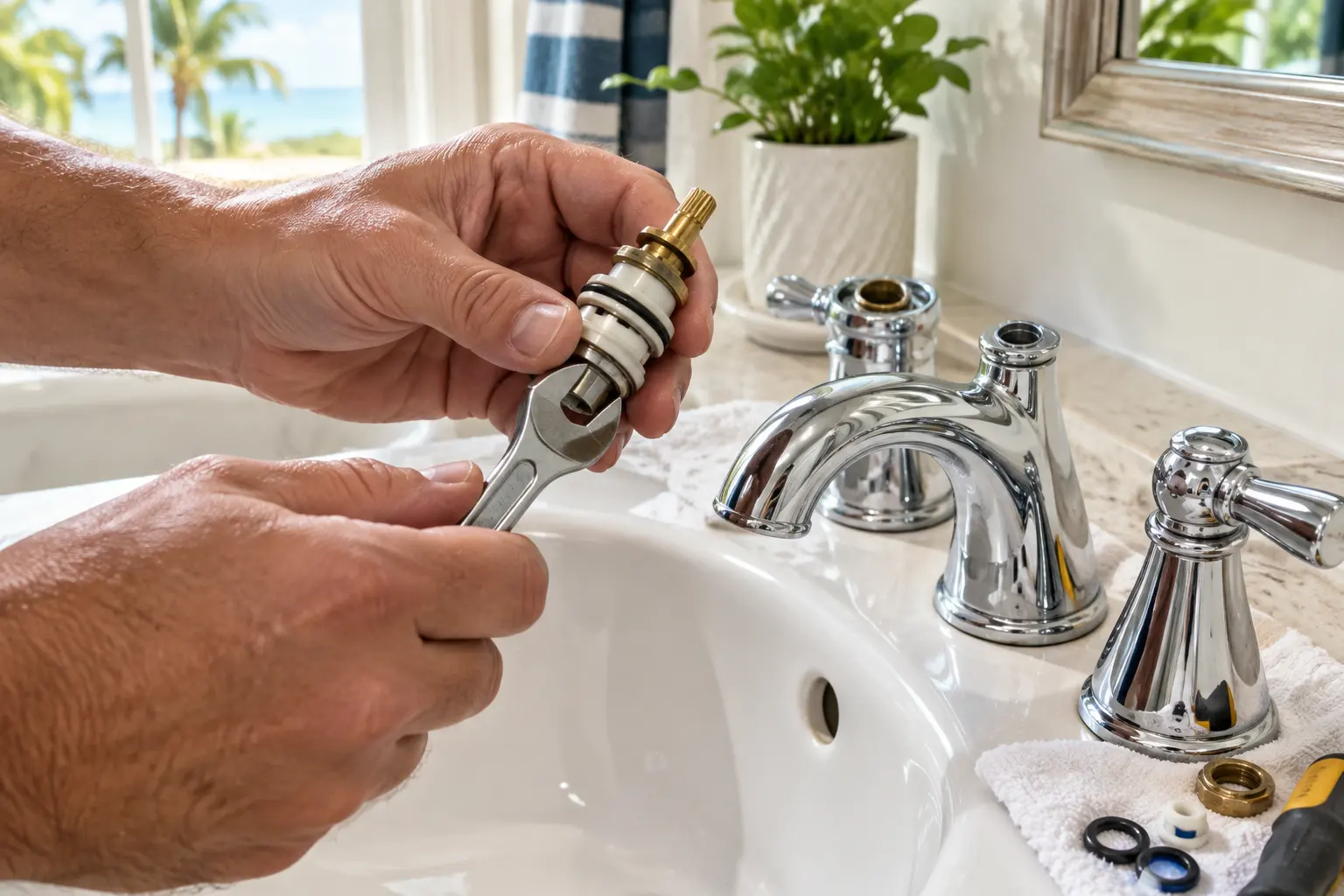
Modern faucets use cartridges or ceramic discs to control flow. Older ones use rubber washers and seats. Each of these parts wears with use, and minerals in the water can build up on them, causing drips, stiff movement, or uneven temperature.
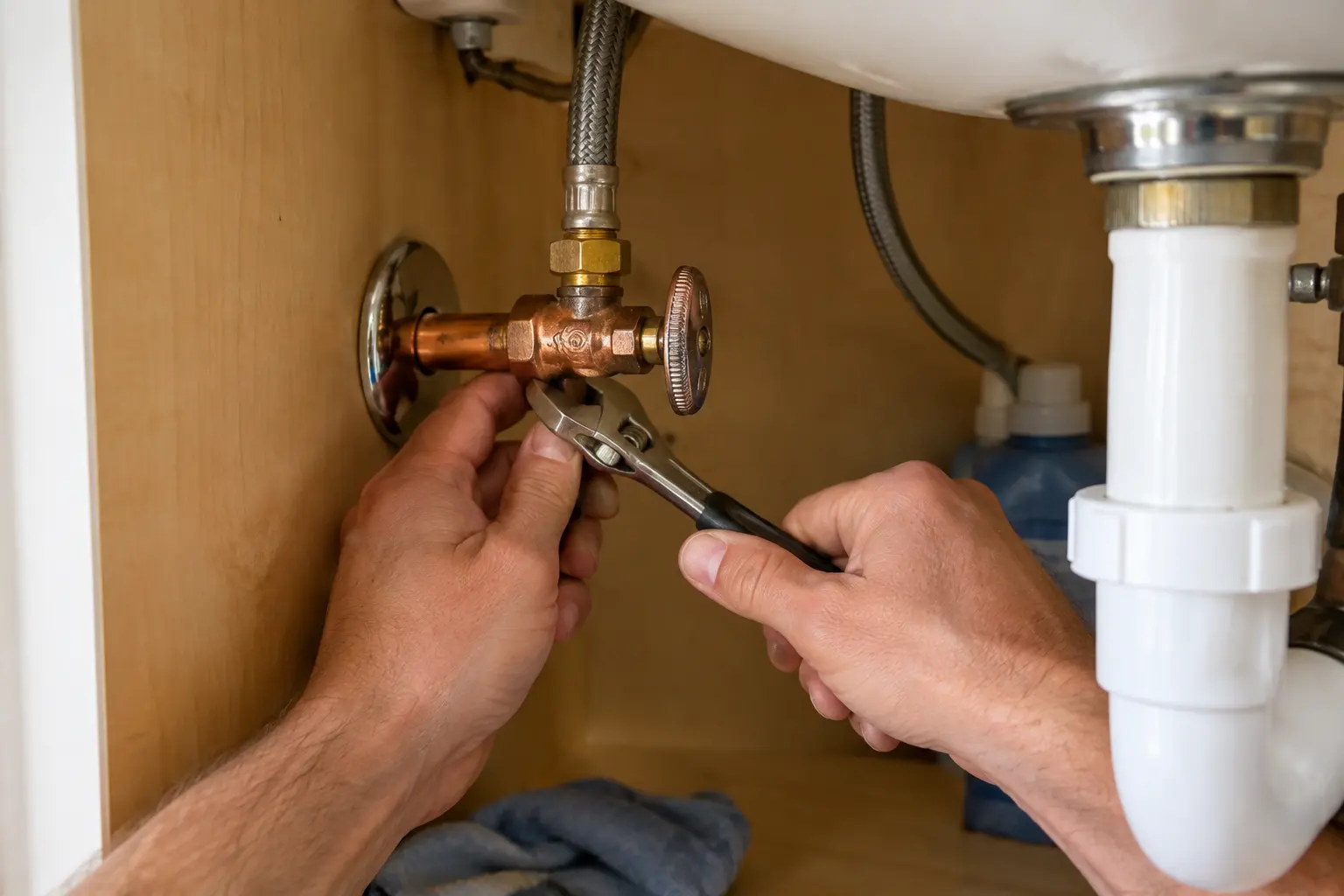
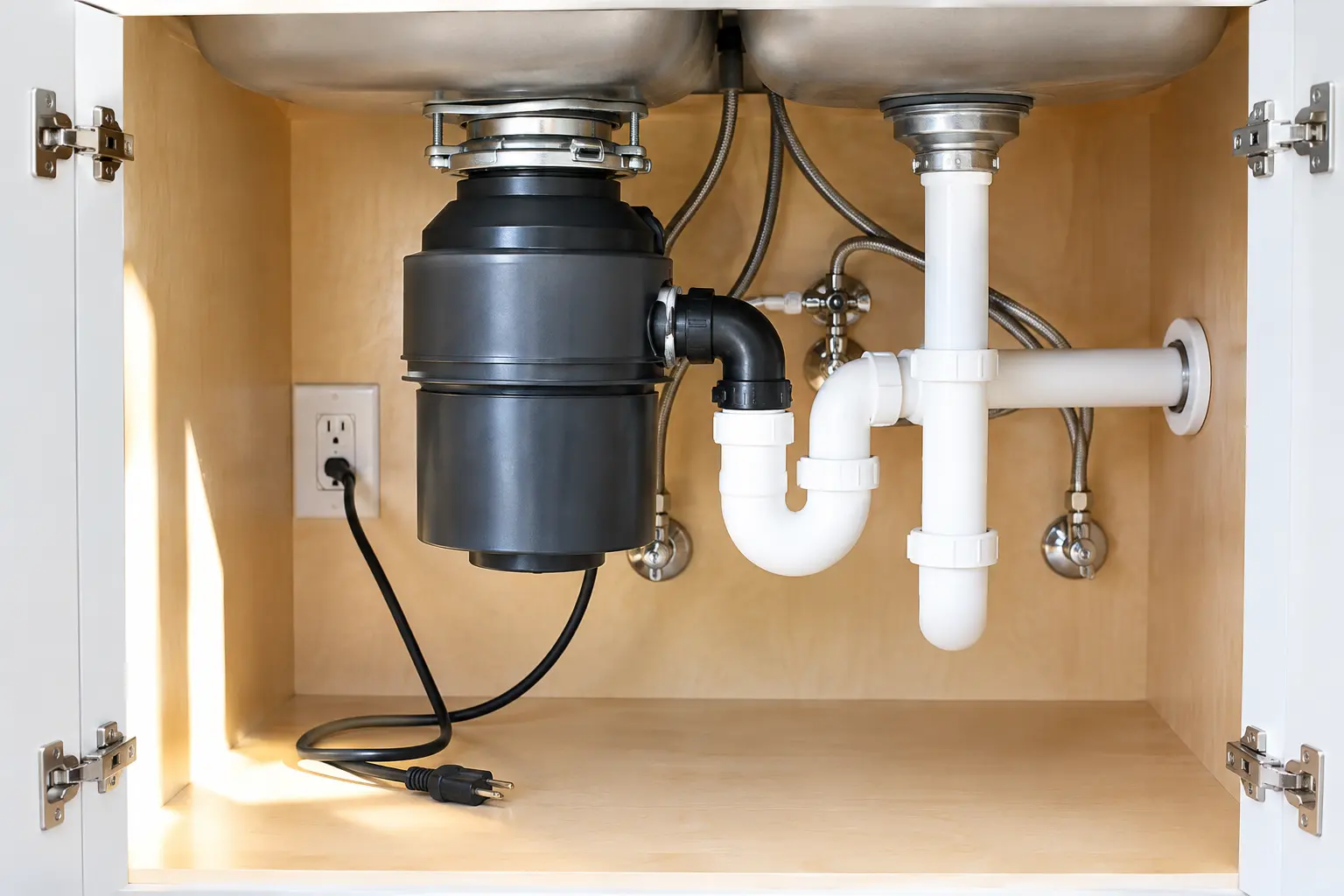
Under the sink, supply hoses and connections can loosen or wear, letting water drip into the cabinet. Aerators can clog with debris, which makes flow weak or spray uneven even though the faucet itself is fine.
What Faucet Repair Includes
Faucet repair typically means identifying the faucet type and replacing the worn cartridge, washer, O rings, or seats. Aerators are cleaned or replaced, and supply connections under the sink are checked and tightened or renewed.
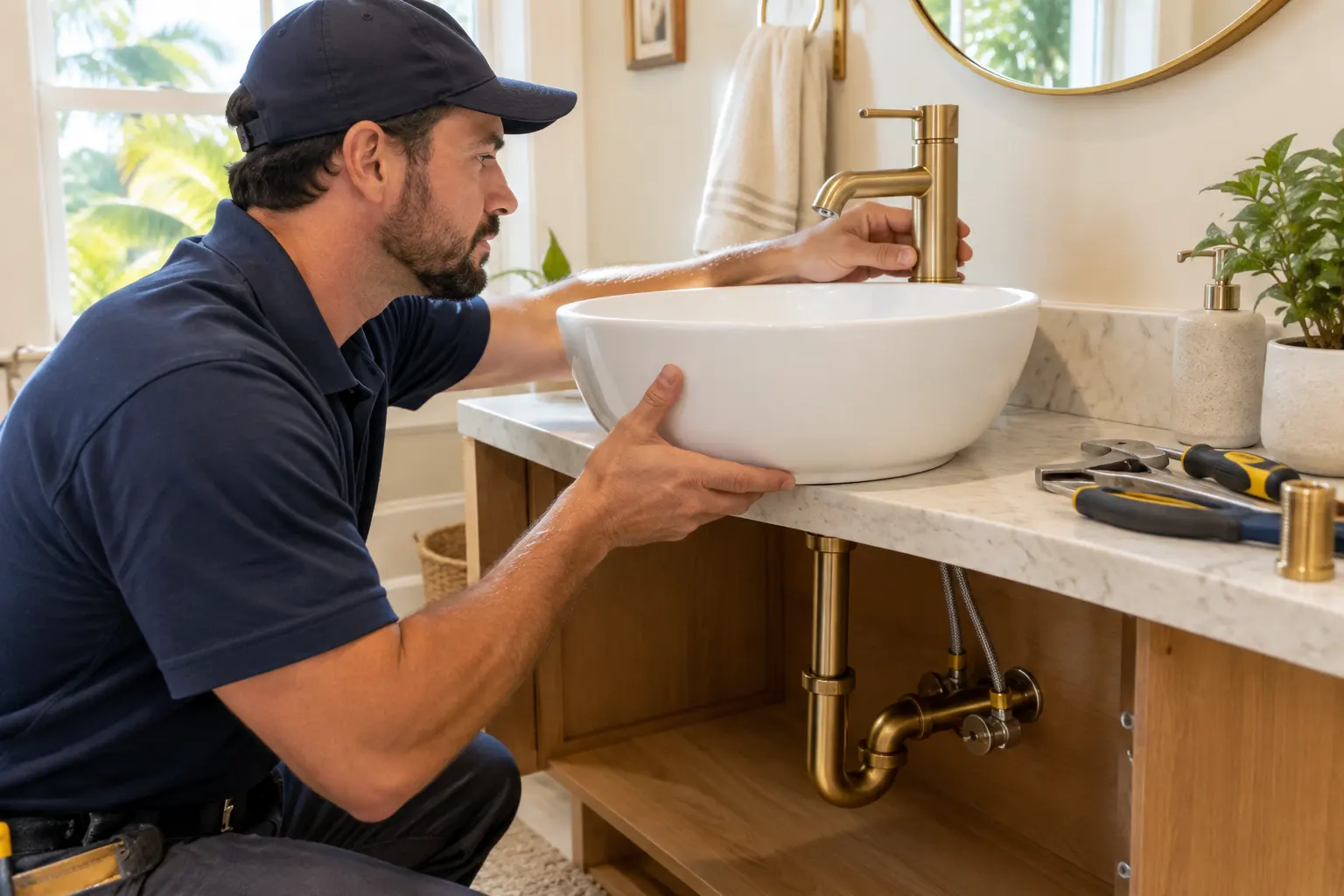
When a faucet is very old, corroded, or parts are no longer made for it, replacing the whole faucet may be simpler. That option can be handled through fixture installation.
How this kind of job usually unfolds
- 1
Tell us the faucet
Share the room, the style, and the brand if you can see it.
- 2
Identify the parts
The faucet is opened to find the specific cartridge, washer, or seal involved.
- 3
Replace what is worn
Matching parts are installed and connections are checked.
- 4
Run and inspect
Hot and cold are run, and the area is checked for drips.
Questions about faucet repair
Is a slow drip really worth fixing?
Yes. A steady drip adds up over months and often means a part is wearing toward a larger leak.
Why is only my kitchen faucet low on pressure?
A clogged aerator or cartridge is a common cause when only one fixture is affected.